WhatsApp Chat

Best Orthodontic Treatment in Qatar

Orthodontic treatment is the branch of dentistry focused on diagnosing, preventing, and correcting misaligned teeth and jaws — a condition clinically known as malocclusion. Left untreated, issues like crowding, bite misalignment, or jaw discrepancies can affect chewing function, speech, jaw joint comfort, and long-term oral health, in addition to the appearance of your smile. At Reem Medical Center, we offer personalized orthodontic care tailored to each patient's unique needs.

Our orthodontist, Dr. Priti Singh (BDS, MDS), is a member of the American Association of Orthodontists (AAO) and the World Federation of Orthodontists (WFO). She is dedicated to helping patients achieve straighter smiles and proper bite alignment, drawing on a full range of appliances — from traditional metal braces to ceramic, self-ligating, and lingual braces, plus clear aligners — so treatment is matched to your bite, budget, and lifestyle rather than a one-size-fits-all approach.
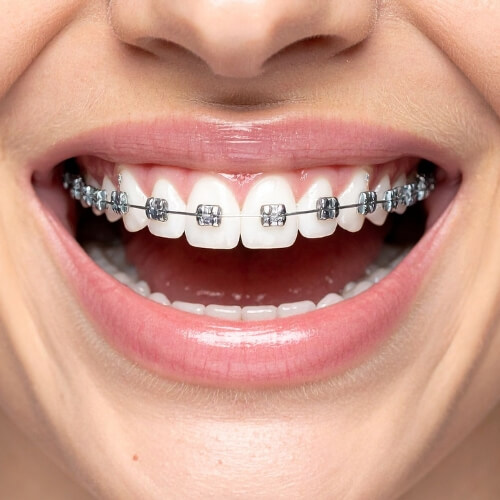
metal braces treatment

Do You Need Braces? Signs to Watch For

Not sure whether your bite needs correction? Common indicators include:

  • Teeth that are crowded, overlapping, or twisted
  • Visible gaps or spacing between teeth
  • Upper and lower teeth that don't meet evenly when biting down
  • Difficulty chewing or biting certain foods
  • Jaw clicking, popping, or soreness
  • Speech affected by tooth position
  • Frequent cheek or tongue biting
  • Mouth-breathing or a resting open-mouth posture in children
  • A smile you feel self-conscious about

If any of this sounds familiar, an orthodontic evaluation can confirm whether — and how — treatment can help. The American Association of Orthodontists recommends a first orthodontic check-up by age 7, even while baby teeth are still present, so developing issues can be caught early while the jaw is still growing.

Common Orthodontic Problems We Treat

Malocclusion shows up in several distinct patterns. Orthodontists often classify bite relationships as Class I (jaws aligned normally, but with crowding or spacing issues), Class II (upper teeth or jaw positioned further forward, an overbite pattern), or Class III (lower jaw positioned further forward, an underbite pattern) — shorthand your orthodontist may use during diagnosis. Specific issues we treat include:

  • Crowding :Insufficient space in the jaw for every tooth to erupt and sit properly, often leading to overlapping or rotated teeth.
  • Spacing (diastema) :Visible gaps between teeth, caused by missing teeth, undersized teeth, or a jaw larger than the teeth require.
  • Overbite :Excessive overlap of the upper front teeth over the lower front teeth, which can wear down enamel and strain the jaw joint over time.
  • Underbite :A Class III pattern where the lower front teeth sit ahead of the upper teeth, often linked to jaw growth and sometimes requiring early interceptive care.
  • Crossbite :One or more upper teeth sitting inside the lower teeth rather than outside, which can lead to uneven jaw growth or wear if untreated.
  • Open bite :Upper and lower front teeth that don't touch when the back teeth are closed, often associated with thumb-sucking or tongue-thrusting habits in children.
  • Impacted or unerupted teeth :Teeth — commonly canines — blocked from emerging into their normal position.
  • Protruding teeth (overjet) :Upper front teeth extending noticeably beyond the lower teeth, which raises the risk of chipping or injury.

Left uncorrected, these issues can contribute to uneven enamel wear, gum recession, TMJ (jaw joint) discomfort, and difficulty cleaning between teeth — which is why early diagnosis matters as much as the cosmetic result.
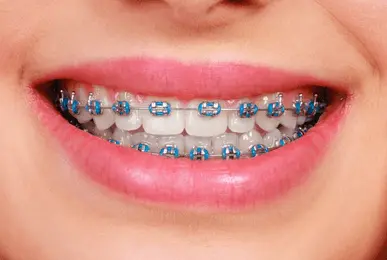
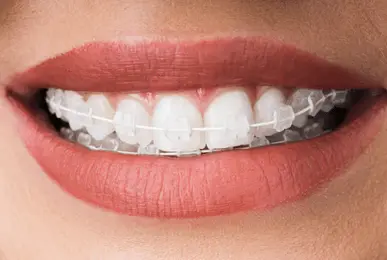
Types of Braces & Orthodontic Appliances We Offer

Transform Your Smile with Advanced Orthodontic Solutions

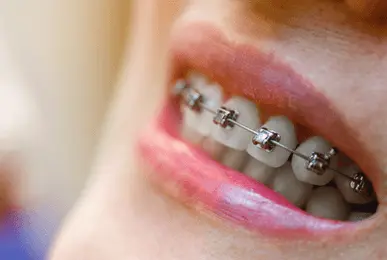
Traditional metal braces bracket and archwire system

Traditional Metal Braces

The most widely used and time-tested orthodontic appliance. Metal braces use high-grade stainless-steel brackets bonded to each tooth and connected by an archwire, secured with small elastic ties. As the wire is adjusted at each visit, it applies steady, controlled pressure that gradually guides teeth into alignment.

  • Material: Stainless-steel brackets and archwire
  • Best for: Mild to severe crowding, spacing, and bite misalignment — including complex cases
  • Comfort & visibility: Most visible option, with a short adjustment period for cheeks and lips
  • Why patients choose them: Durable, cost-efficient, and effective across virtually any malocclusion
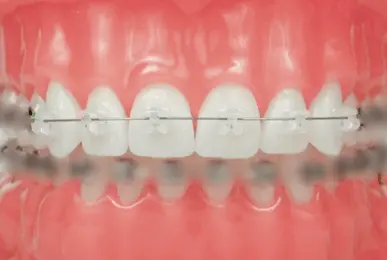
Tooth-colored ceramic braces for discreet teeth straightening

Ceramic Braces

Ceramic braces work on the same bracket-and-archwire principle as traditional braces, but the brackets are made from a tooth-colored or clear ceramic material that blends in with natural enamel, making them noticeably less visible.

  • Material: Tooth-colored/clear ceramic brackets
  • Best for: Teens and adults who want effective correction with a more discreet appearance
  • Comfort & visibility: Much less visible than metal, though brackets are slightly larger and can stain if oral hygiene lapses
  • Why patients choose them: A balance between aesthetics and the proven effectiveness of fixed braces
Self-ligating metal braces with sliding bracket clip

Self-Ligating Braces – Metal

Self-ligating braces use a built-in sliding clip to hold the archwire in place instead of elastic ties. This reduces friction between wire and bracket, which can mean lighter forces and fewer in-chair adjustments for many patients. Reem Medical Center offers self-ligating systems including Damon Braces, one of the most established names in self-ligating orthodontics.

  • Material: Metal brackets with an integrated sliding mechanism (no elastic ties)
  • Best for: Patients who want efficient treatment with fewer clinic visits
  • Comfort & visibility: Visible like traditional metal, but generally easier to keep clean
  • Why patients choose them: Fewer adjustment appointments and less friction than tie-based braces
Self-ligating ceramic braces, tooth-colored

Self-Ligating Braces - Ceramic

The same sliding-clip, self-ligating mechanism above, built into clear or tooth-colored ceramic brackets — combining lower friction with a more discreet appearance.

  • Material: Ceramic brackets with a self-ligating clip
  • Best for: Patients who want self-ligating efficiency with a less visible appliance
  • Comfort & visibility: Discreet, with easier plaque control than tie-based ceramic braces
  • Why patients choose them: Aesthetics and efficiency combined in one system
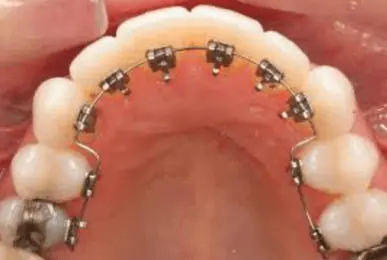
Lingual braces fitted behind the teeth, invisible from the front

Lingual Braces

Lingual braces use the same bracket-and-archwire principle as traditional braces, but each bracket is custom-fabricated and bonded to the back (tongue-side) of the teeth — making them completely invisible from the front.

  • Material: Custom metal brackets bonded to the inner (lingual) surface of the teeth.
  • Best for: Adults seeking a completely hidden treatment option, including many complex cases.
  • Comfort & Visibility: Invisible when you smile; speech and tongue may take a few weeks to adjust.
  • Why choose them: Fully discreet orthodontic treatment without removable aligners.
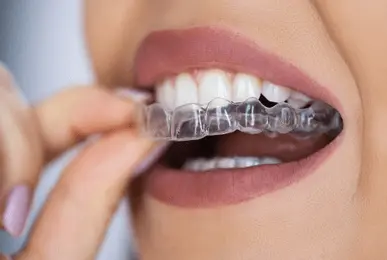
Clear aligner tray for invisible teeth straightening

Clear Aligners

For patients with mild-to-moderate alignment needs who prefer a removable, nearly invisible option, we also offer clear aligner therapy — a series of custom, transparent trays worn in sequence to gradually shift teeth, without brackets or wires.

Explore Clear Aligners in Qatar → for full details on candidacy, the treatment process, timelines, and pricing.

What to Expect: The Orthodontic Treatment Process

1. Consultation & clinical assessment

Dr. Priti Singh reviews your teeth and jaw alignment, discusses your goals, and examines your bite.

2. Diagnostic records

Digital X-rays (often panoramic or cephalometric), photographs, and a digital scan or impressions capture a precise picture of your teeth and jaw relationship.

3. Personalized treatment plan

Based on your diagnosis, we recommend the most suitable appliance — metal, ceramic, self-ligating, lingual braces, or clear aligners — along with an estimated timeline.

4. Appliance placement (bonding)

Brackets are bonded to your teeth and connected with an archwire, or your first set of aligners is fitted.

5. Regular adjustments

Periodic visits to tighten or replace the archwire (or issue new aligner sets) keep teeth moving safely and on schedule.

6. Debonding

Once your alignment goals are met, brackets are carefully removed and teeth are polished.

7. Retention phase

A retainer — fixed, removable, or clear — holds your new alignment in place, since teeth can shift back (relapse) without one.


Orthodontic Treatment for Every Age Group

Children (interceptive / Phase 1 orthodontics):

Early evaluation — recommended around age 7 — can catch developing jaw or bite problems while a child is still growing. Interceptive treatment may use appliances such as palatal expanders, space maintainers, or habit-breaking devices to guide jaw development and create room for permanent teeth before comprehensive braces are needed.

Teens (comprehensive orthodontics):

The teenage years remain the most common time for full orthodontic treatment, once most or all permanent teeth have erupted. Metal, ceramic, self-ligating, and clear aligners are all suitable options, chosen based on lifestyle, sports participation, and aesthetic preference.

Adults:

It's never too late to straighten your smile. Adult orthodontics is increasingly common — whether to address issues missed in childhood, correct relapse after earlier treatment, or prepare teeth for restorative work like crowns, bridges, or implants. Discreet options such as ceramic braces, self-ligating ceramic braces, lingual braces, and clear aligners are especially popular with adult patients balancing treatment with professional life.

Why Choose Reem Medical Center for Orthodontic Treatment

AAO & WFO-affiliated orthodontist

Dr. Priti Singh (BDS, MDS) is a member of the American Association of Orthodontists and the World Federation of Orthodontists, reflecting adherence to internationally recognized standards of care.

A full range of appliances under one roof

From traditional metal braces to lingual braces and clear aligners, treatment is matched to your bite, lifestyle, and budget.

Care for every age and case complexity

Interceptive treatment for children, comprehensive care for teens, and aesthetic-focused options for adults, including complex and post-relapse cases.

Multilingual care

Consultations available in English, Hindi, Malayalam and Tagalog.

Convenient Doha location

Souq Al Jassim, Ibn Malik Street, near Souq Waqif — open Sunday–Thursday (11:00 AM–7:00 PM) and Saturday (1:00 PM–9:00 PM).

Part of a full dental & medical center

Coordinate orthodontic care alongside general dentistry and other specialties at the same clinic.


Frequently Asked Questions

How do I know if I need braces?

Signs include crowded, gapped, or crooked teeth, a bite that doesn't line up evenly, jaw discomfort, or difficulty chewing. An orthodontic evaluation with Dr. Priti Singh can confirm whether treatment is recommended.

What's the best age to start orthodontic treatment?

The American Association of Orthodontists recommends a first evaluation by age 7, though many patients begin comprehensive treatment in their teenage years. Adults can start orthodontic treatment at any age.

How long does orthodontic treatment take?

Most fixed braces treatment takes around 18–24 months, while clear aligners typically range from 6–18 months. Your exact timeline depends on the complexity of your case.

Do braces hurt?

Some pressure or soreness is normal for a few days after placement or an adjustment, but it's usually temporary and manageable. Orthodontic wax can help reduce irritation from brackets or wires.

Which type of braces is right for me?

It depends on your case complexity, budget, and aesthetic preferences. Metal braces are suitable for most cases, while ceramic, self-ligating ceramic, and lingual braces offer more discreet treatment options. We'll recommend the best choice during your consultation.

How much do braces cost in Qatar?

The cost depends on the type of braces and the complexity of your treatment. Our clear aligner treatments range from QAR 9,000–16,000. A personalized quote for metal, ceramic, self-ligating, or lingual braces is provided after your assessment.

Can adults get braces?

Yes. Adult orthodontic treatment is common for correcting alignment issues, treating relapse, or preparing teeth for restorative procedures. Many adults choose discreet options such as ceramic, lingual braces, or clear aligners.

Will I need to change my diet with braces?

Yes. Avoid sticky, hard, and very crunchy foods to help prevent damage to brackets and wires throughout your treatment.

What happens after my braces come off?

After treatment, you'll wear a retainer—fixed, removable, or clear—to keep your teeth in their new position and help prevent them from shifting back.


Ready to Start Your Smile Journey?

Book a consultation with Dr. Priti Singh to find the right orthodontic treatment for your smile, your budget, and your lifestyle.

Book Appointment Now Contact Us

Copyright © Reem Medical Center. All Rights Reserved.